If you’re fascinated by Austria’s landscapes, you’ve probably heard of its mountain lakes, alpine meadows, and famous peaks. But fewer people know that, hidden deep in the Alps, there’s a natural ice cave where you can cool down even on the sunniest day. This guide tells you everything you need to know about Eisriesenwelt and why it deserves a top spot on your Austria travel itinerary.
Eisriesenwelt: A Natural Marvel Like No Other
Eisriesenwelt is German for “World of the Ice Giants”. The cave truly lives up to its name. It’s the largest ice cave in the world, stretching for more than 42 kilometres at an elevation of 1,656 metres above sea level.
Unlike many other ice caves, Eisriesenwelt is entirely natural. Each year, snowmelt seeps into the cave and freezes, creating new ice formations. This means no two visits are ever exactly the same.
The cave is open to visitors from 1 May to 26 October each year. Here’s how a typical tour unfolds:
- Posselt Hall – As you step into the cave, you first enter Posselt Hall, a vast chamber filled with impressive ice stalagmites.
- Great Ice Embankment – Next, you encounter a spectacular 25-metre-high ice wall, representing the largest single ice formation in Eisriesenwelt.
- Hymir’s Castle – Beyond the embankment lies Hymir’s Castle, where delicate ice stalactites form a structure known as Fregeil’s Veil.
- Ice Palace – Around 1 kilometre inside the cave and roughly 400 metres underground, you reach the Ice Palace, the final point of the guided tour. No visitors are allowed beyond this area.
What makes the experience truly magical is the interplay of lantern light, darkness, and shimmering ice surfaces. Inside Eisriesenwelt, it feels as if you’ve stepped into a frozen fairytale world. You get to enjoy this otherworldly atmosphere for about 1 hour and 15 minutes.
Tours can be booked at the official website. Alternatively, you always have an opportunity to join an excursion, if you want to enjoy a longer trip to the mountain top yourself.
A Journey Through History and Science
The structure and landscape aren’t the only things that make Eisriesenwelt fascinating. Its history of discovery is just as remarkable.
For centuries, locals, especially hunters and farmers, knew about the cave entrance, but none of them explored the icy depths in a way that was ever recorded. According to historical sources, the first documented exploration took place in 1879, carried out by Anton Posselt, a naturalist from Salzburg. Since then, scientists, adventurers, and tourists have been drawn here to witness this natural wonder. Today, more than 200,000 people visit every year.
The cave’s unique microclimate preserves its ice formations even during the warmest summer months. Knowledgeable guides lead visitors through the labyrinth, using magnesium lamps to reveal hidden details and make the tour truly memorable.
Practical Tips for Visiting Eisriesenwelt
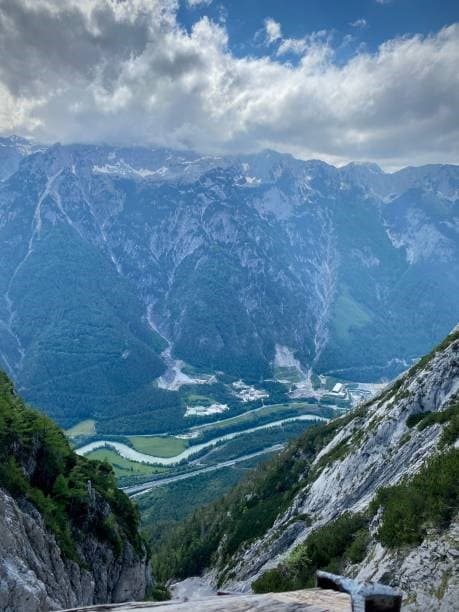
Eisriesenwelt is located about 40 kilometres south of Salzburg, with the route leading from Salzburg to Werfen and then up the mountain where the cave is situated. To reach the cave, you’ll need to hike up the mountain trail. Although the ascent can be a bit challenging, you’re rewarded with breathtaking views over the Salzach Valley along the way.
For the trip, we advise you to:
- Dress warmly, irrespective of the season. The temperature remains below freezing throughout the year. Therefore, warm clothing and rugged shoes are important
- Prepare physically for the hikes. To reach the entrance of the cave, you climb about 700 steps. If you are out of shape, the experience becomes difficult.
- Obey the rules by not taking photographs inside the cave.
When you finally reach the top of the steps, the effort instantly feels worthwhile. The silence is broken only by the wind, and the view over the Salzach Valley stretches out like a painting. Standing at the cave entrance, you feel a mix of relief, awe, and anticipation for the world of ice inside.
Conclusion
Eisriesenwelt stands as a monument to the wonders hidden beneath our feet. It’s a must-visit for any traveller to Austria. Don’t miss the chance to step into the “World of the Ice Giants” and experience one of Europe’s most natural attractions.